

Un Mundo Diferente: The TV Series About Hispanic Serving Institutions
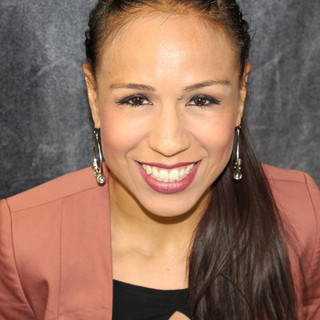
I have long talked about A Different World—the sitcom that aired in 1987 about student life at a fictional historically Black college named Hillman—as having a significant impact on me as a young girl. As a first generation to college, non-Black Latina, the show was my first exposure to Historically Black Colleges and Universities (HBCUs) and to Black life in college. I was too young to think critically about HBCUs, including their histories, struggles, and significance, but enjoyed learning about student life at an HBCU. The show dealt with issues that I would later write about including racism, classism, and equal rights, as well as those that I couldn’t even fathom such as sexual assault and the HIV/AIDS epidemic. As a kid I enjoyed it for the entertainment value without understanding the deeper impact it would have on me. Undeniably, it was important that I saw strong Black characters in lead roles and vital that I witnessed the centering of a collegiate environment that uplifts the identities and livelihoods of Black people in the U.S.

When I give public lectures, I often ask the crowd how many people know what a Hispanic-Serving Institution (HSI) is. On average, about 25% of the crowd raises their hands; sometimes less. Alternatively, when I ask how many know what an HBCU is, a majority of hands go up. This is not surprising, as HBCUs have a much longer history of existence in the United States and have had a dramatic impact on the lives of African Americans for over 180 years, with the first HBCU—Cheyney University—being established in 1837. But beyond their significant impact and the very long list of famous alumni, HBCUs have been featured in TV shows, movies, songs, and even Beyoncé’s 2018 Coachella performance and documentary which paid homage to HBCUs by featuring marching bands, majorettes, and dimensions of Black Greek life. These features have elevated HBCUs as mainstream cultural icons. Yet as I did my research for this blog, I noticed that A Different World was the first to do it in 1987, with Spike Lee’s School Daze following shortly after in 1988.
This brings me to the core argument of this post: HSIs need their own Un Mundo Diferente TV show. HSIs, which now include over 600 colleges and universities across 30 states and locations in the U.S., are becoming significant to the educational access and success, as well as the upward mobility, of Latine/x people. HSIs themselves have entered their “transitional era” in which they are intentionally envisioning and redesigning their approach to educating and serving their core population inclusive of Latine/x students as well as low income and first generation to college students. We know that HSIs are significant, educating over 1.6 million Latine/x students and more than 3.7 million students overall, yet they lack a strong, unapologetic HSI identity and mission. As individual campuses begin to embrace their HSI identity, there is also a push to understand a collective HSI identity, or one that could be featured in a TV show.
So, what makes life at an HSI unique and worth featuring in a TV show? The student population at HSIs is arguably the most diverse population of any campus in the U.S, often enrolling about 45% Latine/x students, 9% Asian American/Native Hawaiian/Pacific Islander students, 9% Black/African American students, 26% white students, and 10% other people of color. The intersectional identities are also abundant, with many students at HSIs being low income, Pell grant recipients, work study students and/or first generation to college. These intersections lend themselves to interesting storylines that could be featured, perhaps as struggles that can be humanized on the big screen. Other intersections would lend themselves to thought-provoking storylines including the realities, struggles, and joys of being queer Latines/xs, Afro-Latines/xs, and Indigenous Latines/xs. It would be an opportunity to discuss larger issues such as anti-Blackness and anti-Indigeneity within the Latine/x community.
HSIs are also seeing an emergence of both culturally relevant and linguistically relevant classrooms that could be featured in the show, as well as the fight to establish cultural centers that elevate Latine/x culture. There would also be an opportunity to feature a bilingual cast of students, and highlight struggles specific to the Latine/x population including the rise of the No Sabo Kids. Yet much like the show A Different World, it would be a chance to discuss the reasons why Latine/x students lose their heritage language, centering racism and xenophobia in the U.S. as driving forces. Other realities, such as the challenges that come with being a member of a mixed-status family and the constant fear of ICE raids in your hometown while you are away at college, deserve to be a part of mainstream TV shows. Simultaneously, much like the show A Different World revival (2026), Un Mundo Diferente could feature the realities of financial precarity and federal disinvestment from the nation’s HSIs.
The possibilities for Un Mundo Diferente storylines are abundant, with HSI research serving as a foundation for producers and writers of the show because HSI scholarship has documented the realities of HSI life. I also think the show could be an opportunity to envision the “thriving era” of HSIs, much like I do in The HSI Movement, where we can imagine a transformed world for HSIs and the students they enroll. Perhaps I will never see the premier of Un Mundo Diferente but knowing that I planted the semillas right here, right now, is good enough for me. I honor A Different World for the impact it had on me, knowing that the show may very well be the reason why I write so passionately about HSIs.


